About 105 minutes
How to Collect and Preserve Insects — Themes and Context
Insects
24,002 recorded words. 2 minutes difference from this book's estimate.
View Gutenberg source #59883
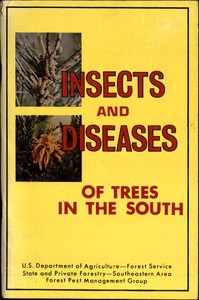
Before opening Insects and Diseases of Trees in the South — Inside the Classic, the edition data offers a quick orientation: 24,530 words, 1 hr 47 min estimated reading time, and 4 detected text sections.
The text analysis averages about 16.5 words per sentence, while the detected sections provide another way to judge how the source is divided.
Project Gutenberg metadata also associates the work with “Trees -- Diseases and pests -- Southern States,” connecting these edition facts with the source record’s subject description.
Explore this collection
These alternatives are selected using recorded categories and estimated reading time.
About 105 minutes
Insects
24,002 recorded words. 2 minutes difference from this book's estimate.
View Gutenberg source #59883About 68 minutes
Insects
15,527 recorded words. 39 minutes difference from this book's estimate.
View Gutenberg source #39222About 165 minutes
Insects
37,860 recorded words. 58 minutes difference from this book's estimate.
View Gutenberg source #40035Search stored excerpts and compare books → Choose by your preferences →
Choices use stored catalog measurements. Estimates vary with reading speed. A shared category is a catalog label, not a claim that two books have the same argument or literary quality.
Search reads excerpt text stored with this catalog and links to its associated Gutenberg record. The connection is stored in the site database; this tool does not recheck that every excerpt is word-for-word identical to that external record. Excerpt search does not cover every chapter and does not verify historical publication dates.
Catalog snapshot checked: 2026-09-26. Coverage: 96 public books, 96 available source excerpts.
Calculated from edition completeness, EPUB availability, text structure and catalogue metadata. Not a user rating.
Total of 100 points, scaled to a 2.5-5.0 range. Editions with an empty description or a missing EPUB file are not scored.
Public-domain source text
The source text is kept in the dedicated reader, separate from this catalogue record and its commentary.
The opening lines of this guide establish a dual audience—forest managers and homeowners—and a clear purpose: identifying pests to save valuable trees. The voice is direct and instructional, using imperatives like “contact” and “avoid.” Yet as the text moves from introduction to specific pests, the language shifts. Descriptions of fungi and insects become more analytical, with precise terms such as “spindle-shaped canker” and “brown hair-like structures.” This change in register reflects a move from urgent advice to detached observation, a pattern worth tracing through the entries.
The introduction relies heavily on second-person commands: “keep trees in a healthy, vigorous condition,” “contact the local State or Federal extension specialist.” This directness suits a manual meant for quick reference. However, the audience is not uniform. The phrase “valuable shade tree” suggests homeowners, while “forest stands” and “seed orchards” point to professionals. The guide’s language must serve both, and it does so by alternating between general advice (e.g., “avoid planting highly susceptible species”) and technical detail (e.g., “Cronartium fusiforme”). This dual address is a deliberate rhetorical strategy, ensuring the text remains useful across contexts.
When describing diseases, the prose becomes more vivid and explanatory. For fusiform rust, the guide notes “the most easily recognized symptom is the spindle-shaped canker” and describes how “in early spring these swellings appear yellow to orange.” Such sensory details ground the reader in observable signs. The text also explains life cycles: “Spores produced from these orange spore masses are then capable of reinfecting apple leaves.” This move from symptom to cycle is a structural pattern. The guide does not merely list; it connects cause and effect, often using phrases like “thus completing the fungus life cycle.” This explanatory layer adds depth beyond a simple identification key.
Each entry follows a rhythm: symptom description, then life cycle or spread, then control. The control sections often introduce a change in pace. For cedar blight, the guide lists actions: “removing and burning infected nursery stock,” “seedbeds should be well drained.” The language becomes terse and imperative again. Yet some entries end with a note of limitation: “No economically feasible control is available for forest stands.” This abrupt shift from actionable steps to resignation is a recurring pattern. It underscores the guide’s honesty about the limits of intervention, especially in natural settings. The pacing thus mirrors the tension between human effort and ecological reality.
Readers will find that the guide’s value lies not only in its identification details but in its rhetorical structure. Pay attention to how the text shifts between urgency and explanation, and how it addresses different users. The guide’s language reveals assumptions about who is reading and what they can do. Noticing these shifts can deepen one’s understanding of the work as a document shaped by its institutional origins and practical goals.
I kept thinking about that old forest guide—how its quiet authority hushed the urgency, letting warnings breathe like far-off thunder. It reminded me of another gentle book, The Butterfly's Ball and the Grasshopper's Feast — A Reader’s Guide, where even the smallest lives get their own solemn, patient telling. Both linger—not loud, just present, like a held breath after a sentence ends.
Answer a few questions and save a private reflection on this device.