eBooks
96 Books foundAbout the Catalogue
The LQUES Public Domain Literature Library offers 96 digitised works, all sourced from Project Gutenberg and freely available to read online. Each record includes the book’s title, author, keywords, a descriptive catalogue note, and a direct link to the full text. The collection spans four curated categories that group works by theme or subject, allowing readers to browse by interest rather than by author or date alone.
Browsing the Library
Readers can explore the catalogue in several ways. The category pages group related titles under a single heading, making it easy to find works on a particular topic. Each book record provides a summary and context, drawn from the original Project Gutenberg metadata and supplemented by editorial notes that highlight the work’s structure, voice, and key ideas. Internal links connect books to their categories and to related works where relevant.
Book Records and Source Attribution
Every book in the catalogue is a public-domain text, originally published by Project Gutenberg. The records preserve the original author names, publication facts, and keywords as supplied by that source. catalogue notes are prepared as supplementary catalogue material and offer a brief reading guide or contextual observation, not a full review. No claim is made that every book has been read cover to cover; the notes are meant to assist first-time browsers.
The Four Categories
- Animals – Natural history, animal behaviour, and field observations from the 19th and early 20th centuries.
- Birds – Bird-focused works written for young readers, blending story and natural history.
- Insects – Entomology, anatomy, and agricultural zoology with practical or medical applications.
- Marine Life – Regional natural history, zoogeography, and studies of human–animal coexistence.
Three Reading Paths
For the nature observer: Start with the Animals category. William J. Long’s Secrets of the Woods (1901) exemplifies patient woodland observation. Then try Ernest Thompson Seton’s Lobo, Rag and Vixen for narrative animal biography. Follow with Jean-Henri Fabre’s insect studies for microscopic fascination.
For the young reader or family sharing: The Birds category offers accessible introductions to birds. Olive Thorne Miller’s The Children’s Book of Birds (1899) uses direct, sympathetic language. Thornton W. Burgess’s Burgess Animal Book for Children (from the Animals category) turns natural history into a classroom story. Mary Howitt’s Birds and their nests (1871) combines poetry with fact.
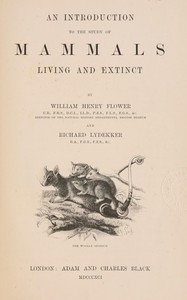
For the researcher or curious browser: The “Nations, Peoples & the Past” category contains detailed regional surveys. Adolph Murie’s Mammals of Mount McKinley National Park (1962) blends fieldwork with conservation insight. Flower and Lydekker’s Introduction to the Study of Mammals (1891) offers a systematic overview. For a different angle, the “Disease, Hygiene & Medical Practice” category includes practical works like the anonymous Insects and Diseases of Trees in the South, which shows applied entomology.
Navigating Categories
Categories are broad groupings meant to aid discovery. They are not absolute literary judgments. A book about birds may appear in the Animals category if its approach is general, or in Birds if aimed at young readers. Readers are encouraged to cross-browse and to use the keyword lists for finer-grained searches.
Bibliographic dates and catalogue measurements
The catalogue distinguishes the Project Gutenberg digital release from a work’s original or first publication. Project Gutenberg is identified as the digital source for the edition available here; its release year is therefore shown as Gutenberg Release Year, not as the work’s original publication year.
When an explicit first-publication or issue date can be supported directly by the title or issue information, it may be shown separately as First Publication Year. When that date cannot be confirmed, the catalogue displays Not confirmed rather than guessing a year.
Where the source text can be measured reliably, the catalogue may provide word count and estimated reading time. These measurements describe reading scope and are not quality rankings.
The current catalogue contains 4 active subject categories: Animals, Birds, Insects, and Marine Life. Categories are browsing aids and may overlap where a work reasonably fits more than one subject.
- Featured
- Featured