01
Animals
A focused group of public-domain works connected by subject, literary setting and recurring questions.

Independent digital catalogue
The LQUES Historical Zoology Library brings together 96 public-domain texts that cross four subject areas: Animals, Birds, Insects, and Marine Life. The collection’s value lies in the intersections between these categories—bird guides that read like animal biographies, insect studies with agricultural applications, and marine surveys that consider human coexistence with sea life. Whether you’re a naturalist, a young reader, or a researcher, the catalogue offers distinct entry points: start with woodland observations in Animals, explore gentle introductions in Birds, or dive into applied entomology. Each record provides context, source attribution, and links to the full text, encouraging cross-browsing across related themes.
Subject gateways
Navigate the catalogue by category, era, or document type to narrow your exploration.
A focused group of public-domain works connected by subject, literary setting and recurring questions.
A focused group of public-domain works connected by subject, literary setting and recurring questions.
A focused group of public-domain works connected by subject, literary setting and recurring questions.
Texts connected with historical lives, social customs, institutions and the worlds in which people lived.
A closer look
One work and three nearby readings from the current catalogue.
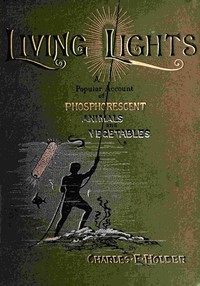
Authored by Authors: Holder, Charles Frederick..., 'Living lights — Themes and Context' stands as a notable and significant work within the Animals category. A detailed 1887 survey of bioluminescent marine life, from surface sparkles to abyssal glow, emphasizing the contrast between scientific fact and the fantastical 'fish stories' of sailors. Examines specific light organs, color variations, and the extreme pressures these creatures endure. It serves as a vital entry point into the broader subjects represented in our archive.
View catalogue record
Routes through the collection
Four routes into the collection for readers approaching the catalogue with different questions.
Record framework
Explains how entries are organized and interconnected without modifying the source texts they represent.
Connect catalogue entries with the resources and references that are presently accessible.
Display clear title, author, and edition details to simplify finding what you need.
Group titles by recurring themes, fictional settings, and historical inquiries.
Show links between entries while keeping the original source language intact.
About these records
How the collection is organized, presented and corrected.
It generally means that the represented source text is no longer protected by copyright in the applicable jurisdiction or has been released for public use. Status may vary by country and edition.
A record may include the title, author, category, cover, description, edition information, source references and available reading or download options.
A category reflects a work’s principal subjects, literary setting, source type and relationship to nearby records in the collection.
The catalogue adds navigation, metadata and editorial context. The represented source text retains its wording, edition information and rights status.
Use the contact page and include the work title, page address and the exact attribution, category, metadata or source detail requiring attention.
Catalogue stewardship
Catalogue information
LQUES Catalogue manages the overall structure of this digital library, which includes 96 books and 126 authors across 4 categories, and ensures the accuracy of these collections.