About 249 minutes
Forest Neighbors: Life Stories of Wild Animals — Story, Setting & Ideas
Animals
57,254 recorded words. 5 minutes difference from this book's estimate.
View Gutenberg source #27933
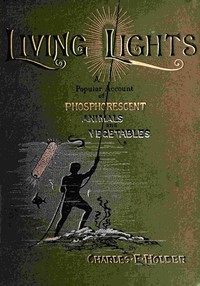
Before opening Living lights — Themes and Context, the edition data offers a quick orientation: 56,120 words, 4 hr 4 min estimated reading time, and 28 detected text sections.
The text analysis averages about 21.3 words per sentence, while the detected sections provide another way to judge how the source is divided.
Project Gutenberg metadata also associates the work with “Animals,” connecting these edition facts with the source record’s subject description.
Explore this collection
These alternatives are selected using recorded categories and estimated reading time.
About 249 minutes
Animals
57,254 recorded words. 5 minutes difference from this book's estimate.
View Gutenberg source #27933About 269 minutes
Animals
61,829 recorded words. 25 minutes difference from this book's estimate.
View Gutenberg source #16077About 273 minutes
Animals
62,612 recorded words. 29 minutes difference from this book's estimate.
View Gutenberg source #56767Search stored excerpts and compare books → Choose by your preferences →
Choices use stored catalog measurements. Estimates vary with reading speed. A shared category is a catalog label, not a claim that two books have the same argument or literary quality.
Search reads excerpt text stored with this catalog and links to its associated Gutenberg record. The connection is stored in the site database; this tool does not recheck that every excerpt is word-for-word identical to that external record. Excerpt search does not cover every chapter and does not verify historical publication dates.
Catalog snapshot checked: 2026-09-26. Coverage: 96 public books, 96 available source excerpts.
Calculated from edition completeness, EPUB availability, text structure and catalogue metadata. Not a user rating.
Total of 100 points, scaled to a 2.5-5.0 range. Editions with an empty description or a missing EPUB file are not scored.
Public-domain source text
The source text is kept in the dedicated reader, separate from this catalogue record and its commentary.
In the preface to Living Lights, Charles Frederick Holder frames his subject as a deliberate counterweight to fairy tales: “No fairy tale of human invention can relate to us more fascinating scenes than are realized in Nature’s carnivals of the sea.” This tension between the imagined and the observed runs through the entire work. Holder, a fellow of the New-York Academy of Sciences, addresses his book to “young people” and “their unscientific elders,” aiming to convert wonder into systematic inquiry. The excerpts reveal a text that moves between precise anatomical description—such as the “double row of luminous disks” on Stomias—and speculative wonder about the purpose of these lights, as when he asks whether the two colors of Malacosteus niger are “a system of signals” or “merely lures.”
Holder repeatedly juxtaposes the fragility of his subjects with the crushing environments they inhabit. He notes that abyssal water is “near the freezing-point, and subject to pressure so great that instruments of glass are shattered and reduced to powder.” Yet delicate, luminous fish thrive there. This paradox becomes a rhetorical device: the most improbable “fish-stories” told by mariners, he argues, are less astonishing than the verified facts. The Chiasmodus, or black swallower, can engulf prey “five times its own bulk” thanks to its “rubber-like” skin. Holder’s tone is that of a patient instructor, using the reader’s likely skepticism as a springboard for evidence.
Several excerpts dwell on the variety of light produced by different species. Malacosteus niger emits “a golden, and the other a greenish phosphorescence” from two organs on its head. Stomias is “surrounded by a brilliant luminous aureola” from a double row of disks. Eustomias obscurus carries “extremely small, almost invisible” light organs spread over its surface. Holder does not settle on a single explanation for these differences; instead, he poses open questions about signaling, luring, or species recognition. This restraint keeps the focus on the observable phenomena rather than forcing a unifying theory.
Holder’s own experience shapes the narrative. He writes of “many years spent on Southern shores” and dedicates the book to his father “in remembrance of days passed among the living lights of the outer reef.” Yet the excerpts also draw heavily on secondhand reports from deep-sea expeditions—the French “Talisman” and the United States Fish Commission. The reader is thus positioned between the familiar coastal world and the alien abyssal one. Holder’s language shifts accordingly: the surface is described in terms of “night festivals” and “carnivals,” while the depths are rendered with clinical measurements (“a mile and a quarter beneath the surface”) and technical names.
Readers approaching Living Lights should expect a work that oscillates between the lyrical and the taxonomic. Holder’s primary evidence is the creature itself, not the story around it. Pay attention to the footnotes and the names of the naturalists he cites—Filhol, Günther, Ayres—as they anchor his claims. The book rewards those who read with a map of the Atlantic in mind, tracing the routes of the “Talisman” and the Fish Commission vessels that brought these living lights to the surface.
There’s a melancholic comfort in knowing those abyssal glow-worms never needed our belief to shine. I keep thinking of that while rereading Children of the Wild — Inside the Classic, where the woods feel just as vast and indifferent to us. Both books remind me of sitting alone, watching something luminous and utterly unconcerned with being watched.
Build a private reading journal entry for this title.









