About 107 minutes
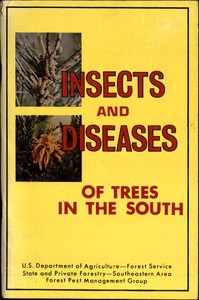
Insects and Diseases of Trees in the South — Inside the Classic
Insects
24,530 recorded words. 58 minutes difference from this book's estimate.
View Gutenberg source #50584
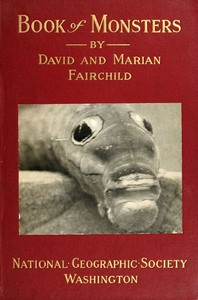
For Book of monsters — Key Ideas to Explore, the stored edition analysis reports 37,860 words, 2 hr 45 min estimated reading time, and 7 detected text sections.
The text analysis averages about 27.2 words per sentence, while the detected sections provide another way to judge how the source is divided.
Project Gutenberg metadata also associates the work with “Spiders,” connecting these edition facts with the source record’s subject description.
Explore this collection
These alternatives are selected using recorded categories and estimated reading time.
About 107 minutes
Insects
24,530 recorded words. 58 minutes difference from this book's estimate.
View Gutenberg source #50584About 105 minutes
Insects
24,002 recorded words. 60 minutes difference from this book's estimate.
View Gutenberg source #59883About 68 minutes
Insects
15,527 recorded words. 97 minutes difference from this book's estimate.
View Gutenberg source #39222Search stored excerpts and compare books → Choose by your preferences →
Choices use stored catalog measurements. Estimates vary with reading speed. A shared category is a catalog label, not a claim that two books have the same argument or literary quality.
Search reads excerpt text stored with this catalog and links to its associated Gutenberg record. The connection is stored in the site database; this tool does not recheck that every excerpt is word-for-word identical to that external record. Excerpt search does not cover every chapter and does not verify historical publication dates.
Catalog snapshot checked: 2026-09-26. Coverage: 96 public books, 96 available source excerpts.
Calculated from edition completeness, EPUB availability, text structure and catalogue metadata. Not a user rating.
Total of 100 points, scaled to a 2.5-5.0 range. Editions with an empty description or a missing EPUB file are not scored.
Public-domain source text
The source text is kept in the dedicated reader, separate from this catalogue record and its commentary.
The Fairchilds open their 'Book of Monsters' with a striking rhetorical move: they grant insects, spiders, and myriapods the status of 'real inhabitants of the world' with 'all the rights of ownership that we have.' This framing immediately shifts the reader's perspective, positioning humans not as dominant overlords but as co-inhabitants locked in a struggle for supremacy. The authors then escalate this claim by linking the flea and mosquito to historical plagues, yellow fever, and malaria—a choice that transforms mundane household pests into agents of world-historical catastrophe. The prose is direct and unflinching, avoiding sentimentalism while still conveying wonder. Throughout the excerpts, the Fairchilds blend scientific observation with a narrative voice that is at once authoritative and personal, as when David Fairchild recounts picking up a sick sawyer beetle on a street corner. This blend of the intimate and the encyclopedic is a defining feature of the work.
The Fairchilds' diction consistently frames insects as antagonists in a zero-sum contest for resources. They describe the chinch bug as having 'demonstrated his power to devastate the wheat fields,' and the cucumber beetle as 'our enemy all its life long.' This language of warfare—'struggle,' 'control,' 'enemies'—is not merely metaphorical; it reflects the authors' view of entomology as a practical, urgent science. Yet they also undercut this adversarial tone by anthropomorphizing their subjects. The scarab beetle is said to 'content herself' with digging holes, while the twelve-spotted cucumber beetle is described as 'waiting for cucumbers to come up.' These small personifications create a strange intimacy, as if the reader is being introduced to neighbors with competing interests. The effect is to make the reader see these creatures as agents, not mere pests.
The Fairchilds' descriptions are notable for their specificity and sensory detail. The sawyer beetle is 'squirrel-gray,' a color comparison that evokes a familiar mammal rather than a technical color chart. The cucumber beetle is 'yellow-green' with spots, and its sudden appearance is likened to a surprise attack: 'literally eaten up over night.' The authors also ground their observations in personal experience. David Fairchild writes of picking up a sick beetle on a street corner, examining it for what was 'the matter.' This first-person intrusion is rare in scientific writing of the period and gives the text an anecdotal quality. The reader is invited to share the author's curiosity, as when he wonders about the scarab's ancient symbolism: 'did it come with the race into its civilization, or did it arise as the whim of some great Pharaoh?' Such questions blend natural history with cultural history, expanding the scope beyond mere taxonomy.
The Fairchilds frequently address the reader directly, using second-person constructions that create a sense of shared inquiry. 'Every child in the South who has left his cucumber hills unscreened knows this,' they write, assuming a common experience. They also invoke contemporary scientists by name, such as Dr. Erwin F. Smith, to lend authority to claims about disease transmission. This technique bridges the gap between popular and expert knowledge. The authors are not afraid to admit uncertainty: 'The puzzle is, where do they come from so suddenly?' This rhetorical question invites the reader to wonder alongside them. The tone is conversational but never condescending, as when they note that 'anyone who still fails to understand the speed of travel of an epidemic had better watch the cucumber beetles.' The effect is to position the reader as a collaborator in the act of discovery.
The book's structure, as indicated by the table of contents, moves from spiders to insects to myriapods, but within each section the Fairchilds organize their portraits not by strict taxonomy but by narrative interest. The scarab beetle entry, for instance, digresses into Egyptian veneration, astronomy, and the concept of resurrection. This associative structure mirrors the authors' curiosity: they follow a thread from dung ball to heavenly sphere. The scarab is described as a 'tumble bug' that 'makes a ball of dung much larger than herself,' and the authors speculate that an Egyptian astronomer might have seen an analogy with 'the traveling of the moon around the earth.' This leap from entomology to ancient cosmology is characteristic of the book's willingness to roam. The Fairchilds also note that the American species is not a 'tumble bug' but 'contents herself with digging holes,' a comparative observation that highlights regional variation without judgment.
Readers approaching 'Book of Monsters' should attend to the Fairchilds' authorial voice: a blend of the scientific and the personal, the precise and the speculative. The book rewards those who read not just for information but for the pleasure of watching two naturalists think aloud. The excerpts suggest a work that is as much about human perception of the natural world as about the creatures themselves. The Fairchilds' choices in diction, dialogue, and description reveal a deep engagement with their subjects, one that balances wonder with a clear-eyed recognition of the stakes involved in the human-insect relationship.
That Book of Monsters stayed with me less for its creatures than for how gently it watched them—every word chosen like a hand not wanting to startle. It reminded me of the calm patience in Insects and Diseases of Trees in the South — Inside the Classic, where even the smallest blight is treated with quiet reverence. I kept thinking about that tenderness long after closing it.
Your answers remain private and are stored only in this browser.