About 106 minutes
Fishes of Chautauqua, Cowley and Elk Counties, Kansas — Inside the Classic
Marine Life
24,337 recorded words. 51 minutes difference from this book's estimate.
View Gutenberg source #34523
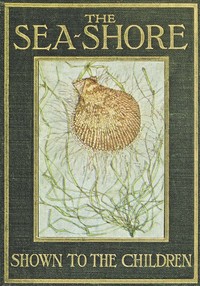
This digital edition of The Sea-Shore, Shown to the Children — Reading Notes is described by source-level measurements including 36,072 words, 2 hr 37 min estimated reading time, and 64 detected text sections.
The text analysis averages about 23.6 words per sentence, while the detected sections provide another way to judge how the source is divided.
Project Gutenberg metadata also associates the work with “Marine animals -- Juvenile literature,” connecting these edition facts with the source record’s subject description.
Explore this collection
These alternatives are selected using recorded categories and estimated reading time.
About 106 minutes
Marine Life
24,337 recorded words. 51 minutes difference from this book's estimate.
View Gutenberg source #34523About 95 minutes
Marine Life
21,831 recorded words. 62 minutes difference from this book's estimate.
View Gutenberg source #61433About 77 minutes
Marine Life
17,509 recorded words. 80 minutes difference from this book's estimate.
View Gutenberg source #37742Search stored excerpts and compare books → Choose by your preferences →
Choices use stored catalog measurements. Estimates vary with reading speed. A shared category is a catalog label, not a claim that two books have the same argument or literary quality.
Search reads excerpt text stored with this catalog and links to its associated Gutenberg record. The connection is stored in the site database; this tool does not recheck that every excerpt is word-for-word identical to that external record. Excerpt search does not cover every chapter and does not verify historical publication dates.
Catalog snapshot checked: 2026-09-26. Coverage: 96 public books, 96 available source excerpts.
Calculated from edition completeness, EPUB availability, text structure and catalogue metadata. Not a user rating.
Total of 100 points, scaled to a 2.5-5.0 range. Editions with an empty description or a missing EPUB file are not scored.
Public-domain source text
The source text is kept in the dedicated reader, separate from this catalogue record and its commentary.
Theodore Wood's The Sea-Shore, Shown to the Children (1907) opens with a list of 48 coloured plates organized by chapter, immediately signaling its methodical approach to marine life. The table of contents groups creatures into fishes, molluscs, bivalves, crabs, lobsters, and more, each with multiple plates. This structure invites a first reader to browse by visual interest rather than read linearly. The excerpts reveal a consistent voice: direct, explanatory, and occasionally playful, as when describing how a whale strains zoeas through its baleen fringe.
The book's opening pages function as a visual index. Each plate is numbered and titled, from "The Gobies" to "The Pinna." This layout suggests that the illustrations—48 coloured plates by Janet Harvey Kelman—are the primary draw. A first reader might flip to a plate that catches the eye, then read the corresponding description. The text itself reinforces this browsing mode: chapters are short, each focusing on a single animal or group. For instance, the section on hermit crabs begins with a direct address: "If you go down among the rocks when the tide is out, and hunt about in the pools." This invites the reader to imagine a real seashore visit, grounding the scientific details in a familiar activity.
Wood's prose is conversational but precise. He explains the crab's life cycle by comparing it to an insect's: the zoea is a "caterpillar," the megalopa a "chrysalis." This analogy makes unfamiliar biology accessible. He also uses vivid, concrete language: the megalopa has "eyes which are enormously big in proportion to the size of the head" and "looks rather like a hammer." Such descriptions help a reader visualize creatures they may never have seen. The voice is that of a patient teacher, occasionally breaking into exclamation: "Doesn't it seem strange that the biggest animal on earth should feed on some of the very smallest?" This rhetorical question encourages wonder without demanding an answer.
Across the excerpts, a theme emerges: how marine animals change form. The crab's journey from zoea to megalopa to adult is described in detail, with attention to molting and the development of claws. Similarly, the hermit crab's soft tail is contrasted with its armored body, highlighting an adaptation for protection. These details are not isolated; they recur in different chapters, building a picture of life cycles and survival strategies. A first reader might notice that Wood frequently explains how a creature feeds, moves, or grows, rather than just naming parts. This emphasis on process makes the book feel dynamic, like a field guide that also tells a story of transformation.
The text repeatedly addresses the reader directly, using "you" and imperatives: "you may often find the shell of a whelk," "you have heard, of course, of the very useful substance which we call 'whalebone.'" This creates a sense of shared discovery. The reader is positioned as a young naturalist, encouraged to explore tide pools and observe. The book assumes no prior knowledge but expects curiosity. For a first reading, this tone is inviting: it suggests that the seashore is a place of accessible wonders, where even the smallest creature—like the zoea—has a story worth knowing. The closing of each section often returns to the reader's potential experience, reinforcing the idea that the book is a companion to real exploration.
For a first reading, approach The Sea-Shore, Shown to the Children as a visual tour guided by a knowledgeable companion. Let the plates lead, then read the corresponding text for context. Notice how Wood builds a vocabulary of marine life through repeated comparisons and direct address. The book rewards both casual browsing and focused study, offering a window into Edwardian natural history writing for children.
I’ve spent many quiet evenings with Theodore Wood’s gentle coaxing of young eyes toward tide pools, marveling how patience reveals a crab’s shy footfall. That same unhurried wonderment appears in Fishes of Chautauqua, Cowley and Elk Counties, Kansas — Inside the Classic, where fish merely wait in prairie streams, asking only that we learn their names slowly, like an old friend’s passing face.
Your answers remain private and are stored only in this browser.