About 106 minutes
Fishes of Chautauqua, Cowley and Elk Counties, Kansas — Inside the Classic
Marine Life
24,337 recorded words. 11 minutes difference from this book's estimate.
View Gutenberg source #34523
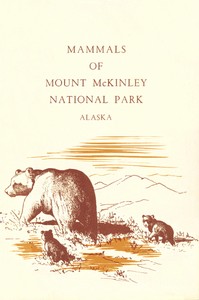
The source record for Mammals of Mount McKinley National Park — Edition Insights measures this digital text at 21,831 words, 1 hr 35 min estimated reading time, and 3 detected text sections.
The text analysis averages about 18.9 words per sentence, while the detected sections provide another way to judge how the source is divided.
Project Gutenberg metadata also associates the work with “Mammals -- Alaska -- Denali National Park and Preserve,” connecting these edition facts with the source record’s subject description.
Explore this collection
These alternatives are selected using recorded categories and estimated reading time.
About 106 minutes
Marine Life
24,337 recorded words. 11 minutes difference from this book's estimate.
View Gutenberg source #34523About 77 minutes
Marine Life
17,509 recorded words. 18 minutes difference from this book's estimate.
View Gutenberg source #37742About 46 minutes
Marine Life
10,521 recorded words. 49 minutes difference from this book's estimate.
View Gutenberg source #33560Search stored excerpts and compare books → Choose by your preferences →
Choices use stored catalog measurements. Estimates vary with reading speed. A shared category is a catalog label, not a claim that two books have the same argument or literary quality.
Search reads excerpt text stored with this catalog and links to its associated Gutenberg record. The connection is stored in the site database; this tool does not recheck that every excerpt is word-for-word identical to that external record. Excerpt search does not cover every chapter and does not verify historical publication dates.
Catalog snapshot checked: 2026-09-26. Coverage: 96 public books, 96 available source excerpts.
Calculated from edition completeness, EPUB availability, text structure and catalogue metadata. Not a user rating.
Total of 100 points, scaled to a 2.5-5.0 range. Editions with an empty description or a missing EPUB file are not scored.
Public-domain source text
The source text is kept in the dedicated reader, separate from this catalogue record and its commentary.
Adolph Murie opens Mammals of Mount McKinley National Park with a declaration that the park represents a "far-reaching cultural achievement," where "the intangible values of the human heart and spirit take precedence." This is not a dry species list but a work that frames animal life within a philosophy of non-intervention: foxes dig burrows freely, grizzlies wander unmolested, and wolves are "respected citizens." Murie explicitly ties his observations to the park's mission, arguing that boundaries must be ample and human intrusions minimal to preserve "this ebb and flow of life." The opening thus sets a dual agenda—scientific description and ethical advocacy—that shapes every subsequent species account.
After the philosophical preamble, Murie shifts abruptly to species-by-species accounts. The transition is instructive: the reader moves from a statement about "freedom and purity of nature" to precise measurements of a marten's body ("16 to 17 inches long, and the tail, including hair at tips, 8 or 9 inches") and detailed food habits. This juxtaposition reveals Murie's method—he grounds his conservation ideals in empirical data. For instance, he notes that martens in the park feed primarily on meadow voles and red-backed mice, not red squirrels as once thought, and that they eat blueberries year-round. Such observations are not merely taxonomic; they demonstrate how the park's policy of non-interference allows natural feeding patterns to emerge.
Murie frequently draws on his experience in other national parks, particularly Grand Teton and Wyoming, to contextualize Denali's mammals. When discussing martens, he notes that in Grand Teton they used red squirrel nests for sleeping, "the squirrels suffered only the inconvenience of an unwanted guest." For river otters, he describes watching a family fish in Grand Teton Park, noting they ate small fish starting at the head. These comparisons serve two purposes: they show that Murie's knowledge extends beyond a single location, and they highlight what is distinctive about Denali's populations—for example, that mink are rare in the park despite being abundant elsewhere. The reader gains a sense of the species' broader ecology, not just a local checklist.
Murie devotes careful attention to species that are less conspicuous or seldom seen. The mink, described as "the amphibious member of the weasel family," is noted for its diet of fish, frogs, and muskrats, and for the remarkable Alaska blackfish that can survive frozen and revive when thawed. The river otter, "rare in the park," is given a brief entry that nonetheless includes a vivid anecdote from Grand Teton. These accounts remind the reader that the park's mammal fauna includes not only charismatic megafauna like grizzly bears and caribou but also elusive aquatic and semi-aquatic species. Murie's willingness to report rarity honestly—"the otter is rare in the park"—underscores his commitment to accuracy over sensationalism.
The book concludes with a "Checklist of Mammals of Mount McKinley National Park," a simple list of species names. For a first-time reader, this checklist serves as a useful reference while reading the preceding chapters. Each species account in the main text corresponds to an entry in the list, allowing the reader to track which animals have been covered. The checklist also reveals the scope of the work: 37 mammals, from grizzly bear to shrews and bats. Murie does not rank them by importance; the list is egalitarian, reflecting the park's philosophy that "no species of plant is favored above the rest." This structural choice reinforces the book's core message of ecological equality.
Throughout the species accounts, Murie returns to the theme of human impact. In the marten entry, he notes that the species is found "in the forested parts of the park along the northern and eastern boundary," implying that its distribution is shaped by habitat availability. For the mink, he observes that tracks have been noted along the Nenana River but the animal is rare "over most of the eastern half of the park." These spatial details are not incidental; they reflect the park's boundaries and the degree of human alteration. Murie's underlying argument is that the park's size and protection status directly affect which species thrive. The reader is encouraged to see each animal's presence or absence as a measure of wilderness integrity.
Murie's book rewards a reading that moves between the philosophical opening and the granular species accounts. Pay attention to how he weaves his conservation ethic into even the most technical descriptions—the length of a marten's tail or the diet of a mink. The comparative notes from other parks offer a subtle commentary on what makes Denali unique. And the checklist at the end is not an afterthought but a key to the book's structure. Read with an eye for the interplay between data and values; that is where Murie's true subject lies.
Reading Murie’s gentle notes on Denali’s grizzlies, I felt his patience, his quiet watching. It reminded me of an older, more curious world in An introduction to the study of mammals living and extinct — Inside the Classic, where every creature, even the shrew, held a place in a grand, unhurried story. Both simply observe and wonder.
Your answers remain private and are stored only in this browser.