About 20 minutes
History of Birds — Text and Context
Birds
4,376 recorded words. 12 minutes difference from this book's estimate.
View Gutenberg source #65139
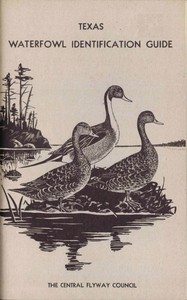
This digital edition of Waterfowl Identification Guide — Reading Companion is described by source-level measurements including 7,230 words, 32 min estimated reading time, and 2 detected text sections.
The text analysis averages about 28.8 words per sentence, while the detected sections provide another way to judge how the source is divided.
Project Gutenberg metadata also associates the work with “Waterfowl -- Texas,” connecting these edition facts with the source record’s subject description.
Explore this collection
These alternatives are selected using recorded categories and estimated reading time.
About 20 minutes
Birds
4,376 recorded words. 12 minutes difference from this book's estimate.
View Gutenberg source #65139About 19 minutes
Birds
4,194 recorded words. 13 minutes difference from this book's estimate.
View Gutenberg source #73392About 46 minutes
Birds
10,396 recorded words. 14 minutes difference from this book's estimate.
View Gutenberg source #49876Search stored excerpts and compare books → Choose by your preferences →
Choices use stored catalog measurements. Estimates vary with reading speed. A shared category is a catalog label, not a claim that two books have the same argument or literary quality.
Search reads excerpt text stored with this catalog and links to its associated Gutenberg record. The connection is stored in the site database; this tool does not recheck that every excerpt is word-for-word identical to that external record. Excerpt search does not cover every chapter and does not verify historical publication dates.
Catalog snapshot checked: 2026-09-26. Coverage: 96 public books, 96 available source excerpts.
Calculated from edition completeness, EPUB availability, text structure and catalogue metadata. Not a user rating.
Total of 100 points, scaled to a 2.5-5.0 range. Editions with an empty description or a missing EPUB file are not scored.
Public-domain source text
The source text is kept in the dedicated reader, separate from this catalogue record and its commentary.
The Waterfowl Identification Guide opens with a foreword that traces the decline of North American waterfowl from an era of ‘vast numbers’ to the onset of scientific management in the early twentieth century. This historical framing is unusual for a field guide, grounding the identification keys that follow in a narrative of habitat loss and regulation. The guide itself is a compact reference, organized by species with a consistent layout: each entry pairs a common name with a small diagram and a set of diagnostic features—bill shape, head markings, wing stripes—often reduced to single-word cues such as ‘CHESTNUT HEAD’ or ‘WHITE WING PATCH.’ The text is minimal, relying on visual comparison rather than prose descriptions.
The guide’s entries follow a uniform pattern: a species name, a small silhouette or diagram, and a list of field marks printed in capital letters. For example, the Redhead entry lists ‘GRAY BACK / GRAY WING STRIPE / ♂ CHESTNUT HEAD / HIGH ABRUPT FOREHEAD / BLUE BILL, BLACK TIP / BLACK BREAST.’ The use of symbols (♂, ♀) and abbreviations (‘2ND SEASON MALE’) condenses a great deal of information into a small space. This format assumes a reader who is already familiar with basic waterfowl anatomy—the guide includes a labeled ‘Parts of a Duck’ diagram early on—and who needs quick, comparative cues rather than natural history. The reliance on visual shorthand makes the guide practical for field use but also reveals its origins as a collaborative project: the acknowledgments credit the Atlantic Flyway Council for ‘most of the text’ and the illustrations, suggesting a standardized template adapted for the Central Flyway region.
Despite its title, the guide covers more than just ducks and geese. It includes loons, grebes, cormorants, coots, and rails—species that a waterfowl hunter or birder might encounter in similar wetland habitats. The inclusion of the Double-Crested Cormorant and the Pied-Billed Grebe, for instance, broadens the guide’s utility beyond strictly ‘waterfowl’ as defined by hunting regulations. The catalog subjects list only ‘Waterfowl – Texas’ and ‘Birds – Texas,’ but the excerpts show species such as the King Rail and Sora, which are rails, not waterfowl. This discrepancy suggests that the guide’s intended audience—likely hunters and wildlife managers in the Central Flyway—needed to distinguish all water-associated birds, not just those legally classified as waterfowl. The regional focus is explicit in the council membership list, which includes states from Colorado to Texas, and the foreword’s mention of prairie nesting grounds ties the guide to the flyway’s geography.
The foreword is the only extended prose in the guide. It describes the historical abundance of waterfowl, the drainage of ‘millions of acres of former nesting ground,’ and the subsequent ‘scientific management’ that led to federal regulation. This narrative is not merely background; it shapes the guide’s purpose. The identification keys are tools for responsible harvest, as implied by the closing ‘Waterfowler’s Code’ section. The foreword’s tone is sober, noting that ‘no equal area of the earth’s surface ever supported such vast numbers’ and that habitat deterioration began in the ‘final years of the Nineteenth Century.’ By framing identification within a conservation history, the guide positions itself as part of a management effort, not just a naturalist’s checklist. The excerpts do not reveal whether the guide includes population data or hunting regulations, but the foreword alone establishes a clear link between knowing the birds and protecting their future.
Readers should note that the guide’s diagrams and abbreviated text are designed for rapid comparison, not leisurely study. The foreword provides essential context for why identification matters, but the bulk of the guide is a tool for the field. For those unfamiliar with waterfowl anatomy, the ‘Parts of a Duck’ diagram is a useful starting point. The guide’s regional scope—the Central Flyway—means that some species, like the New Mexico Duck, may be unfamiliar to readers outside that area. Treat the entries as a visual key rather than a complete natural history.
I remember sitting with the Texas guide on a gray morning, trying to match a distant silhouette to an etched plate—the patience of it, the quiet watching. That same unhurried attention lives in The Birds of Washington (Volume 1 of 2) A complete, scientific and popular account of the 372 species of birds found in the state — Background and Themes, though its wingbeats sweep farther north. Two books, one longing to hold what flies away.
Build a private reading journal entry for this title.









