About 70 minutes
Engravings of Lions, Tigers, Panthers, Leopards, Dogs, &c. — A Reader’s Guide
Animals
16,055 recorded words. 3 minutes difference from this book's estimate.
View Gutenberg source #53290
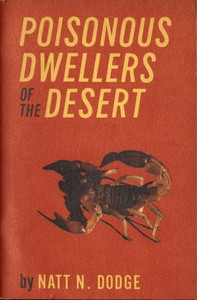
The source record for Poisonous Dwellers of the Desert — Inside the Classic measures this digital text at 16,789 words, 1 hr 13 min estimated reading time, and 3 detected text sections.
The text analysis averages about 20.1 words per sentence, while the detected sections provide another way to judge how the source is divided.
Project Gutenberg metadata also associates the work with “Poisonous animals -- Southwest, New,” connecting these edition facts with the source record’s subject description.
Explore this collection
These alternatives are selected using recorded categories and estimated reading time.
About 70 minutes
Animals
16,055 recorded words. 3 minutes difference from this book's estimate.
View Gutenberg source #53290About 80 minutes
Animals
18,375 recorded words. 7 minutes difference from this book's estimate.
View Gutenberg source #44057About 83 minutes
Animals
19,052 recorded words. 10 minutes difference from this book's estimate.
View Gutenberg source #44058Search stored excerpts and compare books → Choose by your preferences →
Choices use stored catalog measurements. Estimates vary with reading speed. A shared category is a catalog label, not a claim that two books have the same argument or literary quality.
Search reads excerpt text stored with this catalog and links to its associated Gutenberg record. The connection is stored in the site database; this tool does not recheck that every excerpt is word-for-word identical to that external record. Excerpt search does not cover every chapter and does not verify historical publication dates.
Catalog snapshot checked: 2026-09-26. Coverage: 96 public books, 96 available source excerpts.
Calculated from edition completeness, EPUB availability, text structure and catalogue metadata. Not a user rating.
Total of 100 points, scaled to a 2.5-5.0 range. Editions with an empty description or a missing EPUB file are not scored.
Public-domain source text
The source text is kept in the dedicated reader, separate from this catalogue record and its commentary.
Natt N. Dodge opens Poisonous Dwellers of the Desert with a frontispiece photograph of Organ Pipe Cactus National Monument, immediately grounding the reader in the Sonoran desert landscape. The book’s tone is consistently clinical and instructional, prioritizing accurate identification and practical first aid over dramatic storytelling. Dodge’s prose shifts between concise species descriptions—such as the puss caterpillar’s “golden-yellow” appearance and its habit of rearing back “to make a face”—and methodical treatment protocols, often citing physicians by name. This dual focus on natural history and emergency response gives the work a steady, authoritative rhythm.
Dodge’s language is notably detached and precise, even when describing creatures that might provoke fear. The Arizona coral snake, for instance, is introduced as “shy and secretive in its habits, timid rather than pugnacious.” The prose avoids sensationalism; instead, it emphasizes the rarity of encounters and the snake’s small size—“rarely reaching 2 feet in length”—to contextualize the actual risk. This measured voice extends to treatment sections, where Dodge lists steps in plain, imperative sentences: “Immerse the inflamed area in iced water for thirty minutes.” The effect is a guide that educates without alarming, trusting the reader to absorb information calmly.
The book’s structure creates distinct changes in reading pace. Species descriptions unfold in leisurely, observational paragraphs—the puss caterpillar is likened to a “tiny, light, golden-yellow kitten”—before abruptly shifting into terse, numbered first-aid instructions. For example, after detailing the caterpillar’s appearance and habitat, Dodge switches to a treatment regimen: “Remove for one minute at ten minute intervals for relief from the cold.” These transitions mirror the real-world shift from curiosity to crisis, reinforcing the book’s dual purpose as both natural history and field manual. The effect is a rhythm that keeps the reader alert, never lingering too long in one mode.
Dodge repeatedly anchors his descriptions in three concrete details: color patterns, body measurements, and specific geographic ranges. The Arizona coral snake is identified by “bands of dark red, cream, and black” and contrasted with the brighter red of the mountain kingsnake. The puss caterpillar’s welts are “ranging in size from a dime to a dollar.” Habitats are pinpointed with precision—the conenose bug’s range, the scorpion’s favored crevices. This consistency gives the book a reliable, almost taxonomic structure, allowing readers to quickly cross-reference any creature they encounter. The repetition of these categories also subtly reinforces the idea that danger can be managed through careful observation.
Dodge’s guide rewards a slow, attentive reading: the careful observer will notice how each creature’s description builds a pattern of caution without panic. The book’s value lies not in its drama but in its steady, factual rhythm—a quality that makes it as useful for the curious naturalist as for the hiker who wants to know what to do if bitten. Read it with a map of the Southwest at hand, and pay close attention to the color bands and size comparisons; they are the keys to distinguishing the truly dangerous from the merely alarming.
There’s something strangely calming about old books that treat danger so plainly, like that guide to desert venom I once picked up—so matter-of-fact, so unafraid. It stayed with me long after. Reading The History of the European Fauna — Key Ideas to Explore felt exactly the same way, that quiet steadiness, just observing how things came to be. I keep thinking about it.
Your answers remain private and are stored only in this browser.









