
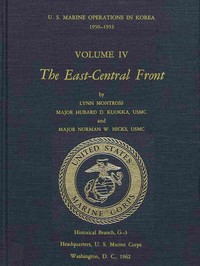
U.S. Marine Operations in Korea, 1950-1953, Volume 4 (of 5)
Let's be clear from the start: this isn't a light read. U.S. Marine Operations in Korea, Volume 4 covers what many consider the defining chapter of the Marine Corps' role in the war. It zooms in on the period from late 1950 into early 1951, a time of shocking reversal. After General MacArthur's push to the Chinese border, the entire UN force gets blindsided by a massive Chinese intervention.
The Story
The book tracks the 1st Marine Division as it advances deep into North Korea, only to find itself completely cut off and surrounded by over ten Chinese divisions near the Chosin (Changjin) Reservoir. The narrative follows the division's regiments as they're hit from all sides in temperatures that plummet to 30 below zero. It's a story told from command posts and foxholes, detailing the frantic battles to hold open a single mountain road—the Main Supply Route—which became their only lifeline. The core of the book is the brutal, two-week fighting retreat from the reservoir down to the port of Hungnam, where they finally linked up with the rest of the UN forces. It's a blow-by-blow account of one of the most famous withdrawals in military history, which the Marines reframed as an 'attack in a different direction.'
Why You Should Read It
What struck me wasn't just the bravery, which is evident on every page, but the overwhelming sense of reality. The book doesn't shy away from the confusion, the intelligence failures, and the brutal cost. You feel the cold, the exhaustion, and the pressure on the young lieutenants and sergeants who had to make life-or-death decisions in the dark. It humanizes a legendary event. You get to know the personalities of the commanders and see how the unique culture and training of the Marines—their flexibility and small-unit leadership—literally saved them from annihilation. It’s less a dry analysis and more a gripping chronicle of resilience.
Final Verdict
This is essential reading for anyone interested in military history, leadership under extreme pressure, or simply an incredible true-life survival story. It's perfect for history buffs who want the detailed, official account, and for general readers who enjoyed books like Band of Brothers and want to see that same kind of unit-focused narrative applied to a different, equally brutal war. Be warned: it's dense with unit designations and map references, but push through that and you'll find one of the most compelling and human stories of 20th-century combat.
This book is widely considered to be in the public domain. Preserving history for future generations.








Oliver Torres
9 months agoI have to admit, it manages to explain difficult concepts in plain English. Absolutely essential reading.