
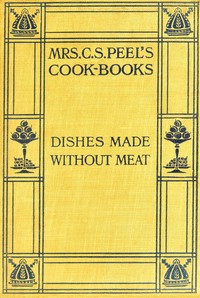
Dishes made without meat by Mrs. C. S. Peel
Published right in the thick of the First World War, 'Dishes made without meat' is a direct response to a national emergency. With key foods rationed, Mrs. Peel, a well-known writer on household management, steps in to solve a very practical problem. The book is structured as a straightforward guide, moving through different types of meals. It starts with soups and savory dishes, showing how to build flavor with vegetables, pulses, and grains. Then it tackles the main event: creating substantial 'meatless mains' that could stand in for a Sunday roast. From there, it covers puddings and sweets that work around sugar and butter shortages, and even includes a section on invalid cookery for those recovering from illness or injury.
The Story
There isn't a fictional plot, but the 'story' here is the real-life drama playing out in kitchens across Britain. The book walks you through the logic of wartime cooking. Mrs. Peel explains how to use lentils and haricot beans to create protein-rich stews, how to make a satisfying nut roast, and how to sweeten a pudding with dried fruit or a careful sprinkle of sugar. She provides specific, tested recipes, but more importantly, she teaches a mindset. It's about substitution, making the most of homegrown vegetables, and avoiding waste at all costs. Reading it, you feel the weight of the responsibility placed on the home cook to keep the family healthy and morale high, all while supporting the war effort by conserving resources.
Why You Should Read It
This book is a small, powerful window into social history. It’s not just a list of old recipes; it’s a manual for resilience. I love the sheer practicality of it. Mrs. Peel isn't writing for gourmets; she's writing for exhausted, worried people who need clear help. Her tone is firm, knowledgeable, and reassuring. You get a real sense of the ingenuity of the time—the idea that a simple cheese pudding or a plate of buttered eggs could be a celebratory meal. It makes you appreciate our modern abundance in a new way, and it’s surprisingly inspiring. In an age of food waste and complex supply chains, there’s something deeply satisfying about its 'use it all up' philosophy.
Final Verdict
Perfect for history lovers, foodies curious about culinary history, or anyone interested in sustainable living. If you enjoy shows like 'The Great British Bake Off' or reading about the Home Front during the wars, you'll find this fascinating. It’s not a flashy cookbook you’d use every day, but as a piece of living history and a testament to everyday creativity, it’s absolutely absorbing. Think of it less as a recipe collection and more as a conversation with a very determined, clever woman from the past.
This historical work is free of copyright protections. You can copy, modify, and distribute it freely.
Jessica Jackson
3 months agoFrom a researcher's perspective, the author manages to bridge the gap between theory and practice effectively. This adds significant depth to my understanding of the field.
Nancy Brown
1 year agoI was skeptical about the depth of this book at first, but the formatting on mobile devices is surprisingly crisp and clear. This exceeded my expectations in almost every way.
Linda White
1 year agoThe citations provided are a goldmine for further academic study.
John Davis
10 months agoThe peer-reviewed feel of this content gives me great confidence.

Robert Thomas
2 years agoI started reading this with a critical mind, the footnotes provide extra depth for those who want to dig deeper. I appreciate the effort that went into this curation.