
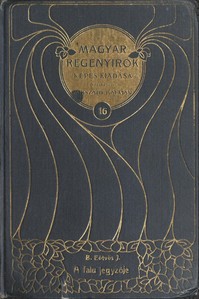
A falu jegyzője (2. kötet): Regény by báró József Eötvös
Welcome back to the fictional Hungarian county of Taksony, where the battle for justice is a messy, personal affair. 'A falu jegyzője' isn't a fast-paced thriller, but a rich, character-driven exploration of a society at a crossroads.
The Story
This second volume continues the story of János Tengelyi, the village notary who is an outsider trying to navigate a world ruled by ancient privileges and modern greed. The central conflict heats up around a contested noble patent—a document proving Tengelyi's rightful noble status, which his enemies are desperate to keep hidden. Without it, he's powerless. The local magnate, Rety, and his cunning lawyer, Kisléghy, weave a complex web of legal maneuvers and personal attacks to discredit and ruin Tengelyi. The plot thickens with abductions, courtroom dramas, and the desperate struggles of other characters caught in the crossfire, like the tragic Viola family. It's a slow-burn pressure cooker where the tension comes from watching good people get squeezed by a system designed to protect the powerful.
Why You Should Read It
What makes this book stick with you isn't just the plot, but Eötvös's incredible eye for human nature. Tengelyi isn't a flawless hero; he's stubborn and sometimes naive, which makes his fight more compelling. The "villains" like Rety aren't cartoonish monsters, but believable products of their environment—men who see morality as an inconvenience. Eötvös uses this small county as a microcosm to ask big questions that still resonate: What is real justice? Can one person change a corrupt system? The writing immerses you completely in the atmosphere of 1840s Hungary, with all its social tensions and fading aristocratic glory. You feel the mud of the village roads and the stifling formality of the manor houses.
Final Verdict
This is a book for patient readers who love getting deep into a world and its characters. It's perfect for fans of classic 19th-century social novels (think along the lines of Trollope or Eliot) who want a Central European perspective. History buffs will appreciate the authentic backdrop of pre-reform Hungary. It's not a light read, but it's a profoundly satisfying one. If you enjoyed the first volume, this second part deepens every conflict and pays off the setup with intelligence and heart. You're left with a powerful story about integrity that feels both of its time and timeless.
No rights are reserved for this publication. You do not need permission to reproduce this work.
Patricia Harris
1 year agoComparing this to other titles in the same genre, the case studies and practical examples provided add immense value. It definitely lives up to the reputation of the publisher.
Joseph Davis
2 years agoUnlike many other resources I've purchased before, the inclusion of diverse viewpoints strengthens the overall narrative. A trustworthy resource that I'll keep in my digital library.
Kimberly Lee
11 months agoThe research depth is palpable from the very first chapter.
Paul Lee
9 months agoAs a professional in this niche, the quality of the diagrams and illustrations (if applicable) is top-notch. The insights gained here are worth every minute of reading.






Linda Garcia
3 months agoI was particularly interested in the case studies mentioned here, the data points used to support the main thesis are quite robust. This is a solid reference for both beginners and experts.