
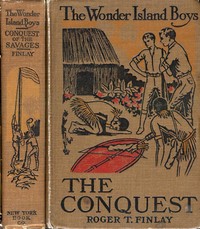
The Wonder Island Boys: Conquest of the Savages by Roger T. Finlay
Let's talk about a book that's pure, old-school adventure. Published in 1915, 'The Wonder Island Boys: Conquest of the Savages' is the second book in a series by Roger T. Finlay. It picks up right where the first one left off, but you can easily jump in.
The Story
We follow brothers Harry and George, two American teens stranded on a mysterious island after a shipwreck. They're not just sitting around waiting for rescue. Using their wits and knowledge from back home, they've started building a proper settlement—think shelters, tools, and even a crude forge. Their professor friend, who was shipwrecked with them, acts as their guide. The "wonder" of the island isn't just its beauty; it's full of strange plants and animals, and the brothers keep stumbling upon clues that suggest a lost civilization was there before them.
The main drama kicks in when they confirm the island is inhabited by native tribes, whom the book calls "savages." The brothers' goal shifts from simple survival to something bigger and trickier: establishing a safe colony. This leads to exploration, tense encounters, skirmishes, and attempts at communication and trade. The plot is a mix of survival ingenuity, light archaeology, and frontier-style conflict, all wrapped up in the spirit of early 20th-century boy's own adventures.
Why You Should Read It
First, it's a fascinating historical artifact. Reading it, you get a direct window into the adventure stories and colonial attitudes that were popular over a century ago. The brothers' can-do spirit and their ability to "tame" the wilderness with practical science are the heart of the book's charm.
That said, a modern reader needs to go in with context. The portrayal of the island's native people is a product of its time and can be uncomfortable. It's not nuanced. But within its framework, the book isn't just about conquest. There are moments where the boys try to understand and negotiate, showing a glimmer of something more complex than sheer domination. The real fun is in the survival details—the way they solve problems and explore the island's secrets.
Final Verdict
This book is perfect for readers curious about classic adventure genres, fans of old-fashioned survival stories, or anyone interested in the history of popular fiction. It's not a subtle literary novel; it's a fast-paced, earnest tale of exploration and grit. Think of it like a grandparent to modern survival stories. Read it for the adventurous spirit and the historical perspective, but be ready for the outdated worldview that comes with the territory. It's a compelling, if sometimes jarring, piece of publishing history.
This title is part of the public domain archive. It is available for public use and education.
Mason Nguyen
1 year agoPerfect.
William Martin
1 year agoAs someone who reads a lot, the content flows smoothly from one chapter to the next. Worth every second.








Michael White
4 months agoIt’s rare to find such a well-structured narrative nowadays, the attention to detail regarding the core terminology is flawless. A perfect balance of theory and practical advice.