
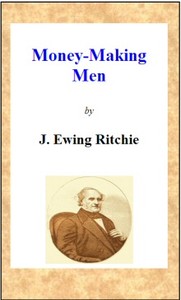
Money-making men; or, how to grow rich by J. Ewing Ritchie
Let's set the scene: London, 1882. The Industrial Revolution is in full swing, and a new class of ultra-wealthy businessmen—railway magnates, factory owners, bankers—is rising. J. Ewing Ritchie, a seasoned journalist, decides to write a field guide to them. 'Money-making men' is his report from the front lines of Victorian capitalism.
The Story
There isn't a traditional narrative with characters. Instead, Ritchie acts as your tour guide. He describes the daily routines, the business tactics, and the personal philosophies of these wealthy men. He outlines their supposed 'rules' for success: relentless focus, careful speculation, living below your means, and cultivating a reputation for reliability. He looks at different paths to wealth, from manufacturing to finance. But the story isn't just a how-to manual. Woven through it is Ritchie's own commentary. He points out the human cost, the bankruptcies left in some men's wakes, and questions whether this single-minded pursuit of money is truly making anyone happier or society better.
Why You Should Read It
This book is a fascinating mirror. Reading Ritchie's observations from 140 years ago feels eerily familiar. The debates about work-life balance, the ethics of wealth, and the 'self-made' myth were all raging back then. I loved hearing his conflicted voice. He's clearly impressed by the energy and innovation, but he's also a moralist who worries about the soul of the nation. It's not a dry economic text; it's a journalist's lively take on the biggest social shift of his time. You get the sense he's talking directly to the everyday person, saying, 'Look at this new world. Let's try to understand it, and maybe be a little cautious.'
Final Verdict
Perfect for history lovers, anyone interested in the roots of modern business culture, or readers who enjoy primary sources that aren't stuffy. If you like books like 'Self-Help' by Samuel Smiles but want a more critical angle, this is for you. It's a short, sharp, and surprisingly relatable look at the birth of the 'millionaire' as a cultural icon. Just be ready for its Victorian perspective—it's a product of its time, but that's what makes it so interesting.
This title is part of the public domain archive. Thank you for supporting open literature.
Elizabeth Hernandez
5 months agoExceptional clarity on a very complex subject.
Margaret Williams
1 month agoUnlike many other resources I've purchased before, the argument presented in the middle section is particularly compelling. Well worth the time invested in reading it.
Sarah Lopez
9 months agoGiven the current trends in this field, the way the author breaks down the core concepts is remarkably clear. Finally, a source that prioritizes accuracy over hype.
Kevin Thomas
2 months agoI started reading out of curiosity and it challenges the reader's perspective in an intellectual way. I will read more from this author.





Patricia Brown
6 months agoThe peer-reviewed feel of this content gives me great confidence.