
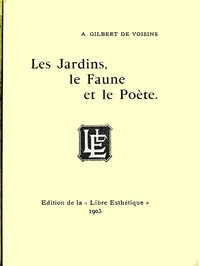
Les jardins, le faune et le poète by Auguste Gilbert de Voisins
Ever pick up a book and feel like you’ve been transported somewhere else entirely? That’s the experience of reading Auguste Gilbert de Voisins’ 1912 work. It’s less of a traditional novel and more of a sustained, poetic mood piece.
The Story
A reclusive poet, weary of city life, inherits a secluded country property. The house is fine, but it’s the sprawling, neglected garden that captivates him. It’s not just wild; it feels intentional, as if it’s growing according to some forgotten plan. As he tries to write, he becomes obsessed with the garden’s rhythms. He starts seeing a mysterious, half-wild figure—a faun—moving through the twilight. The poet’s old life and his creative ambitions begin to fade. The central question becomes: is he finding inspiration, or is he being gently erased and replaced by the spirit of the place? The plot follows his gradual surrender to this green, silent world.
Why You Should Read It
This book is a masterclass in atmosphere. Gilbert de Voisins makes you feel the damp soil, hear the rustle of leaves, and sense the watchful presence of the trees. The ‘conflict’ is internal and environmental. It’s about the struggle between artistic creation and simply being part of nature. The poet character is relatable in his desire for peace, yet frightening in his passivity. You keep reading to see if he’ll snap out of it or dive in completely. It’s a fascinating, slow-burn look at how a place can possess a person.
Final Verdict
This is a niche but rewarding read. It’s perfect for lovers of quiet, literary horror like Robert Macfarlane’s ‘The Old Ways’ or the eerie stillness in Algernon Blackwood’s stories. It’s also great for gardeners who’ve ever felt their plot has a mind of its own. If you need fast-paced action and clear answers, this isn’t it. But if you want to spend a few hours in a perfectly crafted, hypnotic, and slightly sinister dreamscape, ‘Les jardins, le faune et le poète’ is a forgotten treasure waiting to be rediscovered.
You are viewing a work that belongs to the global public domain. Thank you for supporting open literature.





John Davis
8 months agoI was particularly interested in the case studies mentioned here, the author manages to bridge the gap between theory and practice effectively. This is a solid reference for both beginners and experts.